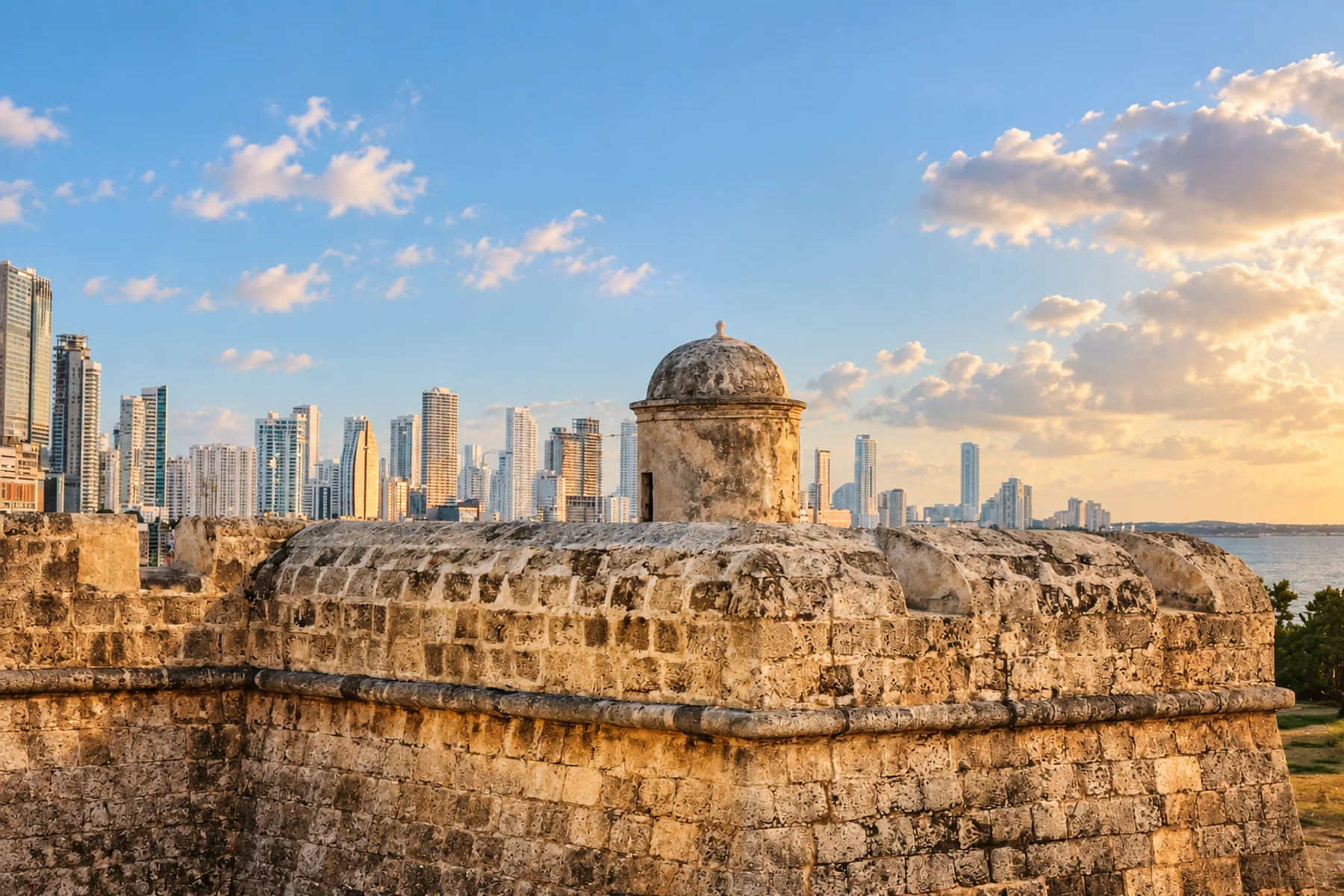
A recent Reddit post called Cartagena “Colombia’s biggest tourist trap” and collected hundreds of upvotes. It attacked pricing, aggressive vendors, cruise traffic and the touristification of Getsemaní. Many agreed; others made an equally important point: if you stay entirely inside the most obvious tourism circuit, you will experience exactly that version of Cartagena.
Which criticisms are real and actionable?
- Beach/service pricing that should be agreed in advance.
- Persistent vendors in high-demand tourist zones.
- Cruise hours concentrating crowds in central corridors.
- Restaurants whose value is more location than product.
- Island experiences marketed as if every option were interchangeable.
What disappears when everything is called a tourist trap?
In 2026, Champeta and Picó culture were formally recognized as national intangible cultural heritage. Getsemaní’s “Vida de Barrio” also received national heritage recognition. Cartagena maintains a year-round cultural agenda covering music, food, literature, jazz and heritage. Celele, meanwhile, ranked #5 in Latin America’s 50 Best Restaurants 2025 and #48 globally. There is a living cultural and culinary city beneath the tourism economy.
The Getsemaní paradox
Getsemaní is where both stories coexist: heavy touristification and protected neighborhood life; new luxury hotels and community memory; street art consumed by visitors and cultural practices lived by residents. A serious guide does not have to choose one narrative and erase the other.
How to avoid the tourist-trap version
| Friction | Response |
|---|---|
| Price | Confirm scope and price before service, ideally in writing. |
| Crowds | Sequence the Old City by time of day, not only by checklist. |
| Food | Separate “view” from “food” and know why each reservation exists. |
| Islands | Choose vibe + operator + logistics, not generic “Rosario.” |
| Culture | Participate with context rather than treating neighborhoods as scenery. |
How to reduce the probability of a poor experience
- Confirm the total price and inclusions before accepting a service.
- Use identifiable operators and traceable booking channels.
- For maritime outings, confirm the pier, vessel, schedule and weather contingency.
- Separate the destination’s cultural value from areas with higher commercial friction.
- Leave room in the itinerary: Cartagena is often better when every hour is not monetised or programmed.
What can justify paying more
In Cartagena, a premium price can make sense when it buys genuine privacy, lower friction, a stronger operator, reliable transport, a hard-to-secure table, access to a local specialist or an experience designed around the group. Paying more simply because of opaque intermediation or in-the-moment pressure does not create value.
When paying more can be rational
Premium pricing is not automatically a tourist trap. Paying more can make sense when the higher price buys something scarce and verifiable: a better location, a respected kitchen, safer or simpler logistics, privacy, a licensed maritime operator, a genuinely strong view, or less time spent coordinating the trip. The warning sign is not the number on the bill; it is a price premium with no corresponding improvement in quality, access, transparency or convenience.
Build the day around one anchor
For many visitors, Cartagena works better when each day has one strong anchor—a restaurant, an island plan, a cultural visit or a night out—and the rest remains flexible. Trying to consume every viral recommendation in a compressed schedule often creates exactly the rushed, transactional version of the city that people later describe as disappointing.
Primary sources
Verifiable facts are supported primarily by official, primary or established specialist sources. Community discussions are used only to identify recurring questions and audience interests.
- Cartagena city government — tourism price cards for La Boquilla
- DIMAR — tourist-navigation controls in Cartagena
- Cartagena city government — champeta and picó culture heritage recognition
- The World’s 50 Best Restaurants — Celele
Social listening
These discussions are included only to show recurring audience questions; they do not substantiate factual claims or constitute venue endorsements.